Interview: Sheldon Silver Discusses The Proposed Construction Of A New Jets Stadium, New York Education And His Family (May 22)
POSTED: 8:58 am EDT May 22,
2005
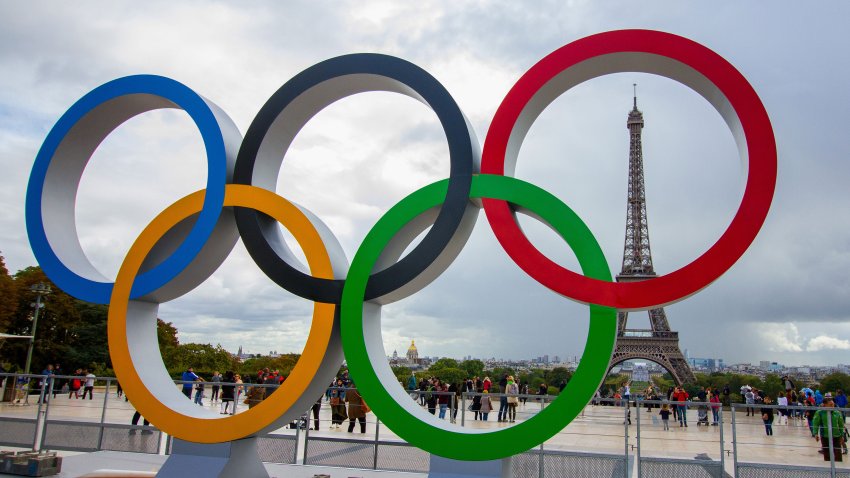
GABE PRESSMAN, Host: -- (Joined in progress) Joe Bruno, the majority leader of the Republican-controlled Senate, and Speaker Sheldon Silver, leader of the Democratic-controlled Assembly. This week the spotlight was on Speaker Silver and Senator Bruno, whose support Mayor Bloomberg needs to get approval of a West Side stadium for the Jets. This would be an integral part of the package the city is offering the Olympics Committee to bring the Games here in 2012. So far both Bruno and Silver have hesitated about approving this massive project. Pataki has called a special meeting of the Public Authorities Control Board for this Wednesday to consider the matter. But so far there's no apparent change in the position of the legislative leaders.Announcer: From Studio 6B in Rockefeller Center, this is a presentation from News Channel 4, Gabe Pressman's NEWS FORUM. Now your host, senior correspondent Gabe Pressman.PRESSMAN: And Assembly Speaker Sheldon Silver, a son of the Lower East Side, who has risen to the height of political power, is our guest on NEWS FORUM today.
Good morning, Mr. Silver, Mr. Speaker, and welcome.Assemblyman SHELDON SILVER (Assembly Speaker): Welcome. Delighted to be with you, Gabe.PRESSMAN: Mayor Bloomberg, Mr. Speaker, to no one's surprise in this company, is determined to get approval from the Public Authorities Control Board for construction of the Jets stadium at the meeting scheduled for this week. Will you vote for it?Assemblyman SILVER: I think there are questions that have to be answered about it. The most specific question that I can tell your viewers is: What is the public cost of this stadium? How much will the public lay out in order to have the Jets play on the West Side of Manhattan?PRESSMAN: And how much so far has been publicized?Assemblyman SILVER: Well, people advertise it as a $600 million public commitment for a $2 billion-plus stadium. But there are many questions as to that. Part of the so-called Jet payment is a $450 million tax-exempt bond issue by the local development corporation that is designed to finance the Jets' payments for the stadium. In order to pay those bonds off, the Jets will receive a virtual real estate tax exemption and will pay taxes to the city in lieu of real estate taxes. And that money will go to pay the $450 bond issue. So the way I count, that's another public commitment to this stadium that...PRESSMAN: So we're over a million bucks--a billion bucks now?Assemblyman SILVER: Over a billion bucks by that. There are also two condemnation proceedings built into the PACB resolution, one for a spot on 30th Street, one for a spot on 11th Avenue at the entrance to the facility. These are condemnations to make entranceways into the stadium.PRESSMAN: Condemning buildings?Assemblyman SILVER: Yeah, into--condemning streets, actually...PRESSMAN: I see.Assemblyman SILVER: ...and making streets and pathways into the building.PRESSMAN: But that's costing too.Assemblyman SILVER: Well, that's a public condemnation. It's a public expense and it goes right into the cost of the stadium and it's a public expense. So I think the public, whether you're for this stadium or against it, whatever the ultimate decision, part of that ultimate decision has to be, how much would the investment of New Yorkers be?PRESSMAN: And we've got it now--just in this conversation we have it up to--What?--a billion and a half?Assemblyman SILVER: Well, we have it somewhere over a billion one, clearly. And estimates--we don't know things and we've asked questions about those things and what they are.PRESSMAN: So you're really saying that the city administration hasn't leveled with the people?Assemblyman SILVER: It's not a matter of leveling with the people. I think it's--normally this Public Authorities Control Board was created to get a handle on the debt of the state and its municipalities...PRESSMAN: Right.Assemblyman SILVER: ...and its public authorities. And, you know, the criticism was the debt is being issued in several--you know, in hundreds of ways through the state and ultimately it's the state's obligation. We had a crisis where various--the Urban Development Corporation was issuing debt in order to buy prisons, in order to balance budgets. And this mentality, many years ago, is what created the Public Authorities Control Board.PRESSMAN: But what you're saying here is that the cost of this thing, this development, this Jets stadium, seems to be running away, both on the state level and on the city level. This a billion and a--more than a billion dollars is going to have to be paid by the taxpayers.Assemblyman SILVER: Well, that's the real question and the real question is: What is it? So we can make an intelligent decision on whether it's worth it to invest this money or not, plain and simple.PRESSMAN: Is most of the money coming out of the city funds or out of the state?Assemblyman SILVER: Well, of the 600 that's been identified, it's supposed to be 3 and 3; 300 million state...PRESSMAN: Right.Assemblyman SILVER: ...300 million city. The $450 million appears to be a vehicle by which city money that would otherwise go to real property taxes in the city and, therefore...PRESSMAN: Right.Assemblyman SILVER: ...support other activities in the city is going to support the stadium as well. What happens and how those street condemnations are paid for, are done, we don't know. Who handles cost overruns? After all, this stadium's going to take time to build. And if the city's history in building things is any guide, you know it's going to cost more than the estimate that there is today in building it. It's just natural as time goes by, as inflation goes by. Who handles that?PRESSMAN: Deputy Mayor Doctoroff and the mayor, Mayor Bloomberg, have both said that the stadium is vital to the Olympics. Are you against having the Olympics in New York?Assemblyman SILVER: I absolutely support the Olympics and I'd like to tell everybody in London, in Paris, in Singapore, that come to New York, hold the Olympics in New York and we will guarantee you--and I know on this I speak for Senator Joseph Bruno as well--we will guarantee you suitable facilities in New York. And the other thing that should be made clear is this stadium, wherever it's built or if it's built on the West Side, doesn't house all of the Olympic Games that are taking place. In the plans for New York's hosting the Olympics, Shea Stadium, Yankee Stadium, Nassau Coliseum are all venues, the Harlem River, for these Summer Olympic Games in 2012 and there are a variety of venues that are used for the competition. This is vital for the public to understand that this is but a part of the overall hosting, most of which is in place in New York.PRESSMAN: What about the letter that you and Mr. Bruno received from Mr. Ueberroth, the chairman of the US Olympic Committee, saying that if you don't give them an answer, give the International Committee an answer by July 6th, then there ain't no Olympics in New York?Assemblyman SILVER: And I want to ask Mr. Ueberroth, will he guarantee us that if we say yes, the Olympics will be in New York? That's the question the public should ask.PRESSMAN: Are you skeptical that the answer would be yes?Assemblyman SILVER: Well, I doubt if the answer is yes. I don't think anybody can guarantee it. I don't think the mayor would go on a limb and kid the public about that as well. So--but that's--you know, Gabe, what's very interesting is while we are all talking about this West Side stadium, there is something that is really lacking in most of the conversation about development in New York, and that's downtown Manhattan.PRESSMAN: And that's where you're from.Assemblyman SILVER: And that's where I'm from and that's where I addressed the Association for a Better New York...PRESSMAN: On Friday.Assemblyman SILVER: ...a downtown association, on Friday. And I laid out a plan to develop downtown and it's unfortunate that the only development that's being talked about by our leaders in the state and the city up until that point are this West Side development. We are now four years--this September will be four years since September 11th and, unfortunately, throughout the country, so far our progress has been an embarrassment to New York.PRESSMAN: What's happening as far as you can see it downtown?Assemblyman SILVER: Well, I think what's happening is we are--do not have the commercial space available that we had. We had 67,000 workers on the site of ground zero who are no longer working in downtown. Gabe, that's 67,000 shoppers in the shops of downtown, Chinatown, Orchard Street and all of the great places for shopping. That's 67,000 diners in the restaurants of downtown.PRESSMAN: If you had your druthers, what would you like to see to stimulate, to ignite activity in Lower Manhattan?Assemblyman SILVER: We need a focus on downtown. We had a commitment. Right after the events of September 11th all governments came together. We made speeches. We'd show the terrorists they can't stop New York. We would build downtown bigger and better than ever. Put together a plan. Don't talk about a Freedom Tower. Design it, get it done. But let's talk about the rest of the site. I laid out a vision Friday that included tax incentives for people creating jobs on ground zero and the rest of downtown, power incentives to come there, elimination of the commercial occupancy tax for leases that are signed for downtown, specifically ground zero and eventually phasing it out around downtown, a rent subsidy that has to be matched by the landlord of ground zero, so that if we gave people a limited time on a 10-year lease, four or five years, we would contribute $5 a square foot if you signed a lease downtown. The earlier you committed, the greater your benefit and we would do it to stimulate the return of those 67,000 jobs or a part of it.I also talked about when we created the World Trade Center...PRESSMAN: Right.Assemblyman SILVER: ...we created it by actually having one of the towers dedicated to government offices. I commit to move the speaker of the Assembly's office into ground zero. I call on the governor, the attorney general and the comptroller to do the same in New York to start it. Move the...PRESSMAN: Right.Assemblyman SILVER: ...two million government office square feet that where on the ground zero site in 1972...PRESSMAN: Right.Assemblyman SILVER: ...let's kick it off till we get the commercial siters back.PRESSMAN: OK, let's come back and talk a little bit more about ground zero and about education after this message.(Announcements)PRESSMAN: And we're back here with Sheldon Silver, the speaker of the New York state Assembly.Before we go on to education, how do you feel about Donald Trump's statement that the two towers should be virtually restored the way they were--he doesn't like all this other talk about cultural centers and so forth--and his denunciation of the design for the site as a "pile of crap"? I'm quoting him.Assemblyman SILVER: That, well, you know, Gabe, was very interesting, and I spoke to Donald Trump yesterday because I talked to him about my plans for downtown in terms of incentives and things like that. And, you know, he said, `Well, what do you think?' And as I've said to many of the reporters before when we talked about the designs originally, whatever you can build as fast as you can build it. Bring back the 67,000 people. The form is less significant. The timetable is significant. We're almost four years since September 11th.PRESSMAN: Right.Assemblyman SILVER: Let's get it done. The form is secondary.PRESSMAN: Now you sit here opposed to the mayor and Doctoroff on the--or seemingly so to me--on the question of the building of the Jets stadium. Do you like the mayor?Assemblyman SILVER: I think--I like to think I have a good relationship with the mayor. I like the mayor. I think he's sincere and we have been able to do a lot of things as far as sharing despite our different political persuasions.PRESSMAN: I understand you shared a Romanian steak with him down on the Lower East Side at a restaurant.Assemblyman SILVER: Yes, and I've shared many a meal with him over the course of his tenure as mayor of the city of New York and mine as speaker. And we have talked about our common constituents from the city of New York and how we can work together to help them.PRESSMAN: Now he's running for re-election. Obviously he's very strongly committed to winning. And you're a Democrat. Do you expect to support the Democratic candidate for mayor?Assemblyman SILVER: I certainly expect to support the Democratic candidate for mayor, no question about it.PRESSMAN: Nothing personal. It's business.Assemblyman SILVER: It's the nature of politics. I respect the mayor and if the people decide--have decided now to elect him, I believe it's my obligation to work for the common benefit of the people who elect both of us.PRESSMAN: You and the mayor have one thing in common. You're strong advocates of reforming education. How do you feel about the tardiness of the state and the city in putting more money into New York City education as mandated by the courts?Assemblyman SILVER: Well, that's one of the arguments that I've had with the mayor in terms of his failure to speak up and prod the governor into resolving the CFE case and putting up the money that the court has dictated has to be done.PRESSMAN: The Committee for Fiscal Equity, which brought the lawsuit.Assemblyman SILVER: Campaigned...PRESSMAN: Right.Assemblyman SILVER: Campaign for Fiscal Equity.PRESSMAN: Yes.Assemblyman SILVER: Which brought the lawsuit, which talks about the inadequacy of the funding for education in high-needs districts, specifically New York City.PRESSMAN: The governor's gone back to court to try to overturn a decision that promised something like $23 billion to New York City?Assemblyman SILVER: Well, that's cumulative.PRESSMAN: Right.Assemblyman SILVER: But should bring about $4 billion to $5 billion on an annual basis...PRESSMAN: Right.Assemblyman SILVER: ...in additional aid for education to students in New York City. The court has found that, because of the needs, because of the poverty, because of English being a second language...PRESSMAN: Right.Assemblyman SILVER: ...in many of the homes in the city, additional resources are necessary to reach those children and we should provide those resources. Under the Constitution of the state of New York, they're guaranteed.PRESSMAN: But despite the committee--or the Campaign for Fiscal Equity, despite the court decision, that money isn't getting here very fast.Assemblyman SILVER: Well, the governor has chosen now for nine years to appeal all of the decisions. We've lost one generation of children...PRESSMAN: And you think the mayor...Assemblyman SILVER: ...in school.PRESSMAN: ...has fallen down on the job in the sense that he has not fought the governor harder?Assemblyman SILVER: I think he has to be a more outspoken critic of the governor's appeals. I think he has to go out and say, `Governor, let's not lose another generation. Let's put that money out now.'PRESSMAN: Now the reading scores for the fourth grade have gone up by something like 10 percent in the city and the mayor is very happy, if not ecstatic, about that. How do you feel about it?Assemblyman SILVER: Well, I'm happy any time we see improvement, especially in education. I think we have a long way to go to say that 50 percent of the students in our schools are reading at grade level. I don't think that's a wonderful thing. And if you look at the scores across the city, that's where it is. But it is an improvement and there are a number of factors. The New York Times last week attributed that to the tough standards that the Regents of the state of New York put into place. I'm happy to say that I have been intricately involved in electing the Regents of the state of New York through the legislative process.PRESSMAN: Is some of the good news on the statistics the result of excluding the worst-performing students from the tests by leaving them back?Assemblyman SILVER: I actually checked those statistics and what's interesting is, with all the ballyhoo about leaving third-graders back...PRESSMAN: Right.Assemblyman SILVER: ...the number of third-graders that were left back last year as opposed to the year before in terms of the percentage of third-graders...PRESSMAN: Right.Assemblyman SILVER: ...is still about 5.9 percent of the third-graders. So it's the same number.PRESSMAN: So it's a wash then.Assemblyman SILVER: Pretty much. It's pretty much a wash. One of the things that I want you to consider, Gabe, in coming to a conclusion here is that about six years ago or seven years ago I began, with my colleagues in the Assembly, introducing a universal pre-K program and class size reduction program. And the numbers that you see now in the city of New York are more dramatic in upstate New York. There are better improvements in those fourth-grade reading scores across this state and I would suggest to you that the fourth grade is now one year later for some of those students in the educational process. They've been in school. They've been in pre-K programs, more of those fourth-graders, number one, and number two, because of the funding and the mandates, they've been in smaller classroom environments. And those resources with--this is the first fourth-grade class that had the advantage of those universal pre-K programs being unfolded across the state, so I'm happy to take some credit as well and anybody else who has something to do with the system, including the wonderful, dedicated teachers that are in the system that don't get enough credit for it.PRESSMAN: OK, let's come back and talk about some more personal things after this.(Announcements)PRESSMAN: And we're back here with Sheldon Silver. You were elected to the Assembly back in '76, was it?Assemblyman SILVER: Yes.PRESSMAN: Yeah.Assemblyman SILVER: November of 1976.PRESSMAN: And in that time, your family has grown and grown, right?Assemblyman SILVER: I started with a seven-year-old and a five-year-old, two children.PRESSMAN: Now you have how many?Assemblyman SILVER: Now my five-year-old has five children of her own.PRESSMAN: Right. How many grandchildren do you have?Assemblyman SILVER: Not enough is the way we say it in our house, Gabe.PRESSMAN: How many?Assemblyman SILVER: It's close to a dozen.PRESSMAN: And...Assemblyman SILVER: Not quite.PRESSMAN: And how many children?Assemblyman SILVER: Four children.PRESSMAN: So the East Side, when you were growing up, was a different time, I know, and you were an athlete. You played basketball.Assemblyman SILVER: Yeah. I don't know if I was an athlete...PRESSMAN: Right.Assemblyman SILVER: ...but I played basketball.PRESSMAN: And you still do?Assemblyman SILVER: I still do, Gabe. I played as recently as three weeks ago and actually hurt my shoulder, broke the collarbone three weeks ago...PRESSMAN: Wow.Assemblyman SILVER: ...playing basketball.PRESSMAN: Do you find that the younger guys in the Assembly have your number?Assemblyman SILVER: Well, the younger guys in the Assembly are good ball players and that's fine when it comes to the basketball court. I like to say, I like to tell people that I went up to dunk the ball and somebody cut my legs out, but that's not really the way it happened.PRESSMAN: Right. As you look back at your life, do you find that you neglected your personal life because of the needs of politics?Assemblyman SILVER: Well, I think one of the things that's clear--my wife and my children made sacrifices having me as the father and the husband. But overall, I think they're happy that they saw me do things, set a model for them. And I also think that I'm richer as a result, not financially but certainly in the entire world. I wouldn't live my life any differently. I think I've had an honor and a privilege to be able to serve the people of my community...PRESSMAN: Right.Assemblyman SILVER: ...and the people of the state.PRESSMAN: You still live on the Lower East Side.Assemblyman SILVER: I live within five blocks of where I was born and I've lived within that radius every day of my life and I'm very proud of that.PRESSMAN: That's not typical of New York City families. Usually they bolt for the suburbs.Assemblyman SILVER: Well, my grandparents lived on the Lower East Side when they came to this country. My parents lived on the Lower East Side when they came from this country and I'm also proud to say that I have several of my grandchildren living on the Lower East Side, including two of them in the apartment I moved into when I was four years old.PRESSMAN: Wow. Do you think that family life was different in the old days, that it was a different kind of life?Assemblyman SILVER: Well, I think one of the successes of families was that intergenerational approach that...PRESSMAN: Extended family?Assemblyman SILVER: The extended family that guided children, gave them values and with this suburban life and this mobile life, I think some of that is missing as a result.PRESSMAN: But you can't legislate it.Assemblyman SILVER: We can't, unfortunately, legislate that and each is to choose their own way of life, but that's the way I like it. I like the grandkids living a block away or across the street.PRESSMAN: Thank you very much, Sheldon Silver, the Assembly speaker, for joining us this morning. I'm Gabe Pressman. Have a good day.
© 2005 by WNBC.com. All rights reserved. This material may not be published, broadcast, rewritten or redistributed.